Food hygiene and commercial cleaning experts in Brampton assist you in maintaining restaurants, food supply centers, baking operations, warehouses, and mobile food operations to code. They disinfect frequently touched areas, food preparation zones, equipment, floors, drains, restrooms, and food handling zones using certified sanitizers, proper dilution, and documented exposure durations.
Important Highlights
- Food safety cleaning experts from Brampton service restaurants, grocery departments, commissaries, warehouses, bakeries, schools, mobile vendors, and allergen-sensitive operations.
- Cross-contamination avoidance is ensured by sanitizing high-touch surfaces, food-contact equipment, kitchens, floors, drains, restrooms, and storage areas with sectional methods.
- Approved sanitizer dilution, alignment, and contact time are confirmed by certified specialists, with finalization logged via swabs, inspections, and remedial documentation.
- Danger, output capacity, transitions, accidents, and guidelines need to shape hygiene plans, with routine, periodic, and seasonal operations distributed by section.
- Select vendors with HACCP, public-health, knowledge, WHMIS, training, insurance, credentials, coded equipment, and inspection-ready hygiene documentation.
What Brampton Facilities Require Food Safety Cleaning?
Food safety cleaning is required for any Brampton facility that handles, maintains, prepares, packages, or offers food. Apply it to your business if it comes under public health inspection, food premises regulations, or internal HACCP-based controls. This includes dining establishments, break rooms, distribution centers, market departments, meat shops, fish areas, stores, and food prep kitchens.
Compliant food safety cleaning is additionally needed in storage warehouses, production plants, freezer facilities, bakeries, school nutrition services, reception halls, and meal delivery centers. Temporary and mobile businesses apply similarly, including mobile kitchens, market vendors, and seasonal booths. Your venue demands documented cleaning protocols when your workers handle raw materials, divide prepared foods, warm meals, or maintain allergen storage. In Brampton, sanitation remains not discretionary; it represents statutory, functional, and public health standards.
What Do Brampton Cleaning Experts Clean?
You need professional cleaners who disinfect frequently contacted areas, kitchens, floor surfaces, and bathrooms to meet food safety and public health standards. They target these areas because they pose the greatest danger for cross-contamination, slip hazards, and hygiene violations.
If you grasp what they sanitize, you'll successfully ensure your operation satisfies required operational and regulatory standards.
Key High-Touch Surface Sanitizing
set how periodically each surface is cleaned
validate effective sanitization
Kitchens, Floors, and Restrooms
Expect Brampton cleaning experts to focus on kitchens, floors, and restrooms because each area carries unique food safety, accident prevention, and public health risks. In industrial kitchens, you need degreasing on cook lines, equipment exteriors, drains, prep surfaces, and splash zones to minimize bacterial growth and pest activity.
Floor care that is recorded should also be anticipated. Technicians clean and remove buildup from tile grout, ceramic surfaces, and vinyl floors, then apply correct drying techniques so you can limit falls and meet regulatory standards. They also address entry points where dampness and dirt enter the building.
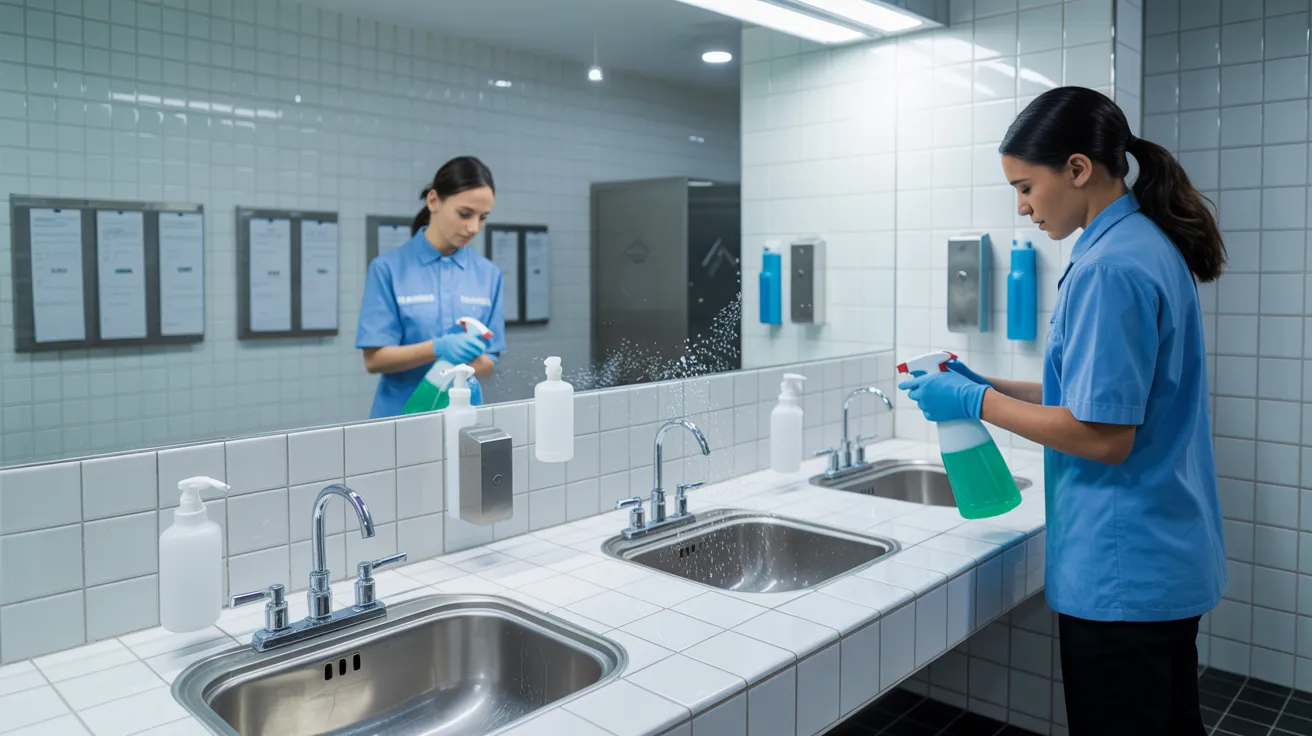
Restroom cleaning requires decontaminating touchpoints, fixtures, partitions, dispensers, and waste containers, replacing items and managing smells. They also maintain restaurant cleaning supply rooms where product storage, sink cleanliness, and drain systems impact daily sanitation standards and worker protection.
The Importance of Food Safety Cleaning in Brampton
Brampton operations require food-safe cleaning standards to meet health code requirements and pass audits. You also reduce cross-contamination by cleaning and sanitizing food-contact surfaces, equipment, and high-touch areas correctly. Most importantly, you help protect public health by lowering the risk of foodborne illness in your facility.
Sanitary Standards Adherence
Since Brampton food companies must follow stringent health requirements, your hygiene maintenance directly determines your capacity to satisfy health codes, defend diners, and eliminate regulatory penalties. You must maintain hygienic food handling zones, verifiable cleaning logs, safe chemical management, and documented employee protocols that comply with municipal and provincial inspection expectations.
When cleaning standards weaken, violations, compliance orders, reputation damage, and service interruption from additional reviews or enforcement actions become threats.
Cross-Contamination Avoidance
Following regulatory requirements depends on your ability to prevent cross-contamination in daily food handling and cleaning. You must separate raw ingredients from ready-to-eat foods, disinfect work areas after use, and store chemicals away from food-contact items. Clear procedures reduce transfer risks and promote steady regulatory adherence.
You should establish allergen separation to keep priority allergens from contacting shared surfaces, containers, or equipment. Use dedicated cutting boards, color-coded tools, and strict utensil labeling so staff don't mix items during preparation or service. Require handwashing after handling raw meat, seafood, eggs, or allergen-containing products. valuable guide Change cleaning rags frequently, and check disinfectant potency using test kits. When staff members receive training on these procedures every shift, you build a more hygienic, secure workplace that meets Brampton's food safety expectations daily.
Public Health Protection
Should cleaning standards break, you don't simply encounter inspection problems—you expand the odds of foodborne illness impacting customers, staff, and the wider Brampton community. You also weaken your role in safeguarding community wellness, especially in high-traffic food premises where contamination can spread quickly through surfaces, equipment, and touchpoints.
You must establish sanitation protocols that remove contaminants, disinfect correctly, and confirm effectiveness. This requires following exposure times, utilizing approved disinfectants, documenting procedures, and training employees to satisfy regulatory standards. These controls promote disease prevention by limiting pathogens before contaminating food or surfaces. Across Brampton, strong cleaning safeguards vulnerable groups, reduces disease potential, and shows your diligence. When you maintain proper protocols, you go beyond requirements—you substantially lower hazards and facilitate secure food handling city-wide.
How Does Cleaning Support Food Safety Compliance?
Following strict sanitation practices backs food safety compliance by decreasing contamination threats, preventing pathogen multiplication, and positioning your facility in accordance with sanitation requirements under HACCP-based programs and public health regulations. You ensure that product-contact areas appear visibly clean and microbiologically controlled, facilitating documented preventive controls and inspection readiness.
Systematic cleaning further enhances allergen prevention by removing residues that can lead to undeclared allergen exposure. When you pair verified sanitation methods with standards training, your staff can follow standardized methods, employ approved chemicals properly, update records accurately, and manage deviations before escalation occurs. Consistent cleaning supports supply chain documentation, confirms remedial measures, and proves accountability throughout audits. Additionally, it assists you maintain product safety, preserve regulatory compliance, and reduce the risk of compliance actions, recalls, grievances, and unnecessary safety threats.
When Should You Plan Commercial Cleaning?
You'll achieve the best results from cleaning routines that incorporate risk levels, output volume, and legal mandates rather than a unchanging calendar system alone.
Separate your periodic work from standard cleaning
Selecting the Right Brampton Cleaning Experts: Key Considerations
Evaluate providers first by food-safe sanitation requirements rather than cost. You must ensure each provider understands CFIA, public health, and HACCP-aligned expectations for your business. Request insurance proof, WHMIS compliance, staff training documentation, and supervision methods. Check technician understanding of cross-contamination risks, chemical handling, and traceable sanitation records.
You should further examine service consistency and answerability. Request testimonials from Brampton food businesses, then review reply speed, corrective-action procedures, and communication protocols. Validate the company supports supplier audits and can supply compliance documentation to authorities or third parties. Confirm equipment receives maintenance, colour-coded tools are applied correctly, and facility-specific risks are identified. A qualified provider protects compliance, product quality, and your reputation in the market.
Which elements are contained in a Food Safety Cleaning Plan?
Create a documented strategy that defines every sanitation task, standard, and responsibility prior to beginning production. You should document cleaning schedules, authorized products, mixing ratios, exposure periods, equipment, and testing procedures for each area, section, and machine. Don't forget to add pre-operational inspections, corrective actions, and employee training requirements.
Your plan should also include cross-contamination prevention, waste disposal, pest management measures, and scheduled documentation for bathrooms, drainage, ground surfaces, and food-handling zones. Clarify how you'll separate raw and ready-to-eat processes, support ingredient tracking, and maintain accurate allergen labeling through validated cleaning between product changes. You should define accountability, preserve signed records, and review results against regulatory standards, HACCP controls, and customer requirements. When gaps appear, revise procedures immediately and retrain staff.
Frequently Asked Questions about the Plan
Are cleaning services available for nighttime operations in Brampton facilities?
Yes, you can set up cleaning services to manage nighttime operations in Brampton facilities. You'll manage overnight sanitation around production schedules, security controls, and personnel requirements. Providers generally establish overnight procedures to minimize interruption, copyright compliance, and document finished tasks. You should confirm timeframes, management, access procedures, and disposal methods before service starts.
Do sanitation professionals provide hazard containment solutions?
Yes, you can locate Brampton sanitation experts providing spill response options. They handle hazardous incidents, evaluate risks, contain affected zones, and initiate rapid cleanup to reduce risk and prevent business disruption. You should verify response rates, credentials, PPE measures, and disposal methods. If your facility must adhere to regulations, select a service that documents events, adheres to standards, and supports verification.
Can environmentally safe disinfectants be used safely on food preparation areas?
Yes, plant-based sanitizers can be secure for food-contact surfaces if you pick solutions certified for food use and regulatory compliant. You should validate contact times, dilution ratios, and rinsing needs before use. Many plant based formulas lower harsh chemical exposure, but you still need confirmation of performance against target microorganisms. To maintain residue free surfaces, you need to follow manufacturer instructions exactly and confirm the cleaning agent satisfies food industry regulations.
Do cleaning schedules allow for production fluctuations?
Yes, you can customize sanitation programs for seasonal shifts. You should modify timing, staff levels, disinfectants, and verification steps to match operational cycles while maintaining regulatory requirements. You'll reduce production interruptions by organizing disinfection around equipment transitions, peak seasons, and equipment use patterns. You should additionally update SSOPs, instruction programs, and environmental testing to capture periodic risks, additional allergens, or higher contamination levels. Periodic assessments keep your plan efficient.
Do commercial cleaners educate employees on sanitation best practices?
Certainly, professional cleaning experts coach your employees on sanitation best practices. You obtain staff training on correct chemical practices, contact times, cross-contamination prevention, equipment disassembly, and documentation. They generally coordinate coaching with HACCP, GMP, and CFIA or local public health requirements. Many execute sanitation audits to check standards, identify gaps, and reinforce corrective actions. This enables you to maintain consistent procedures, satisfy audits, and minimize foodborne pathogen risks daily.
Conclusion
Through engaging Brampton commercial cleaning and food safety specialists, you accomplish much beyond organizing—you keep your operation prepared for inspections and your procedures meet requirements. From kitchen spaces to processing areas, all maintained surfaces and organized zones reduce contamination risks and avoid major losses. Through scheduling maintenance on suitable timelines and sticking to a solid cleaning plan, you safeguard your team, clients, and your standing. Within strict regulatory frameworks, clean conditions cannot be considered optional—they represent good business practice.